
Introduction
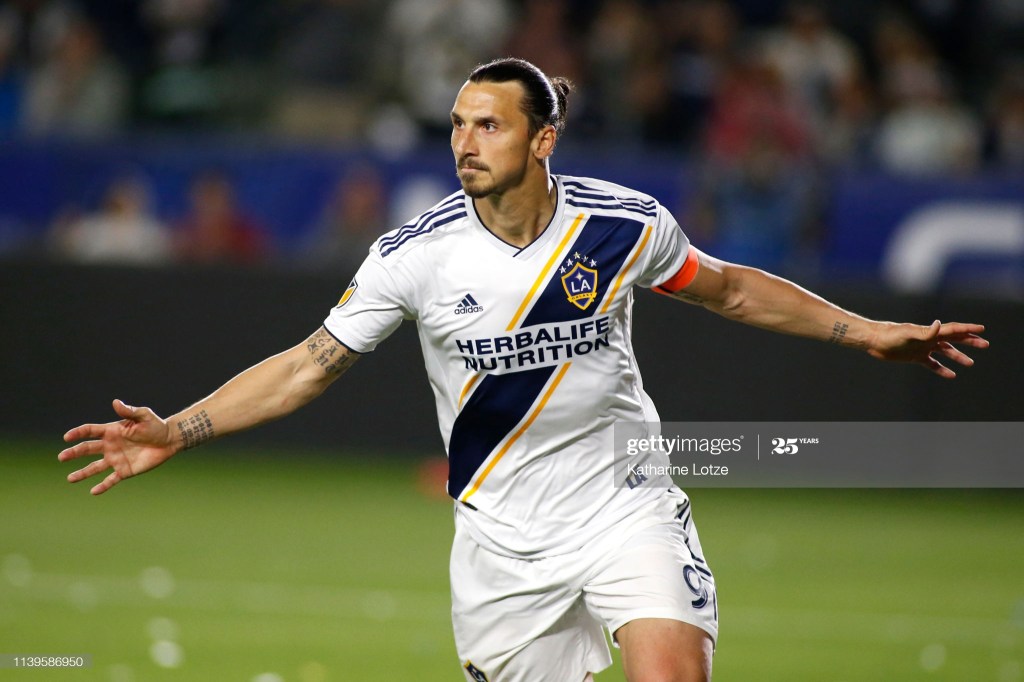
Zlatan Ibrahimovic a renowned Swedes Striker, currently playing for the Italian team AC Milan. He was born on October 3, 1981, in Malmö, Sweden, to a Bosnian father and a Croatian mother. His parents divorced when Ibrahimovic was 2, and he spent a difficult childhood in the immigrant-populated district of Rosengård. By his own account he was a bicycle thief and a school bully, but he developed into a tall, agile athlete with an obvious talent for playing soccer. Zlatan Ibrahimovic overcame a rough upbringing to become a professional footballer. He played for clubs in Sweden ,The Netherlands, Italy, England and USA nabbing multiple scoring titles while leading his team. Ibrahimović began playing football at the age of six, after receiving a pair of football boots. He alternated between FBK Balkan, a Malmö club founded by Yugoslav immigrants, Malmö BI and briefly BK Flagg football clubs.While in his early teens, he was a regular for his hometown club Malmö FF.At the age of 15, Ibrahimović was close to quitting his football career, in favour of working at the docks in Malmö, but his manager convinced him to continue playing.As a kid growing up, his hero was Brazilian forward Ronaldo.
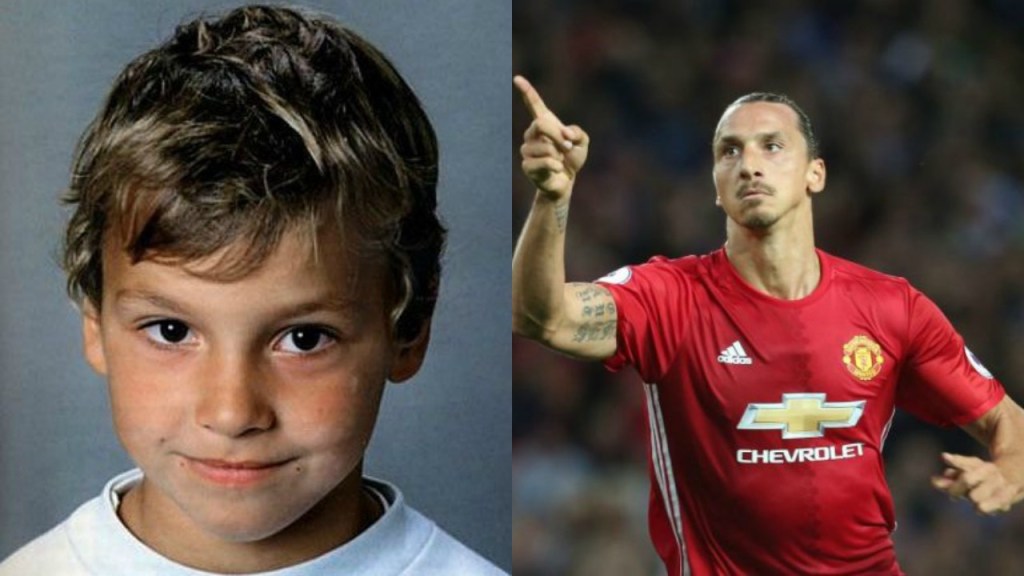
The name “Zalatan” was trademarked in May 2003 at the Swedish Patent and Registration Office for “most likely being perceived as Zlatan Ibrahimović”, which meant that he received exclusive rights to the name for certain products, including sporting goods, clothing and shoes. The personality Zlatan has inevitably plays its part somewhere and the inspiration-aspect of his football career has a lot to do with his character.Zlatan, the young player from Rosengard who became the global voice and face of his country. Zlatan, the man who created a new way of being Swedish, who gave people from an immigrant background a compelling reason to identify with Sweden. Zlatan, the superstar who brought the great European stadiums closer to the suburbs and transformed dreams into tangible realities for a whole generation.
“Believe in yourself” Zlatan has said 1000 times in different interviews when being asked what his advice to youngsters is.
About the book
“I’M Football” is Zlatan Ibrahimovic’s biography by Mats Olsson published in 2018.
The book “I’m Football” tells the story of Zlatan’a footballing journey. He have shown that if we never give up, nothing is impossible. He have won many trophies and a lot of matches, but football has also given him financial security he had never dreamed of. He says “take your talent,believe in yourself and work hard. Then there are no limits to how far you can go”.
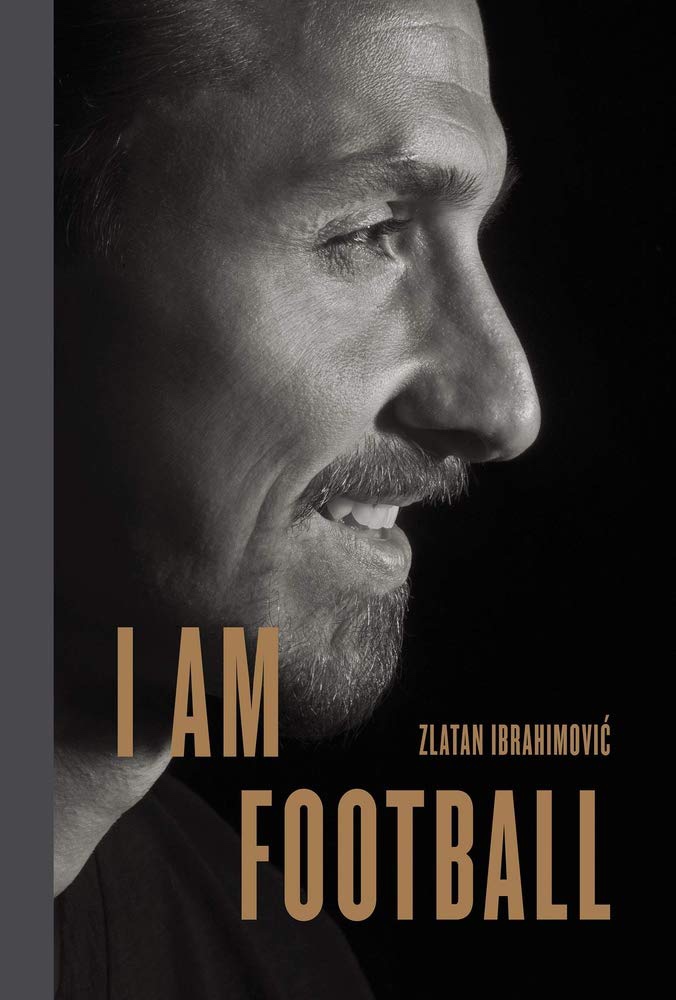
The text in the books are based on many long conversations over the past few years between Zlatan and journalists and author Mats Olsson,who has followed Zlatan’s footballing life.
Early life

Zlatan Ibrahimovic was born on October 3,1981, in Malmö, Sweden, to a Bosnian father and a Croatian mother who were not happily married to each other. Their unstable marriage lasted only for two years. At a tender age of two, Zlatan witnessed his parent’s divorce which came as a result of constant fights,child neglect and abuse. According to Swedish divorce laws, Zlatan’s, mother got the opportunity to take custody of her son. This marked the beginning of what was termed a “Difficult Childhood experience”. According to Zlatan, ‘living with his mother and watching a new step-father coming into his life was indeed a painful experience. Zlatan showed syndromes due to his parent’s divorce and fatherly desertion. At some point,he experienced extreme weight loss and unnatural thinness due to a loss of subcutaneous fat muscle.
The boy with a lisp and a big nose found solace in the ethnic outsiders and rugged immigrant communities whose gang crimes always get to media. His mixture with hoodlums created a new behaviour which saw his first brand of tattoos. This was the first time the selfish,braggart and temperamental lifestyle got to him.
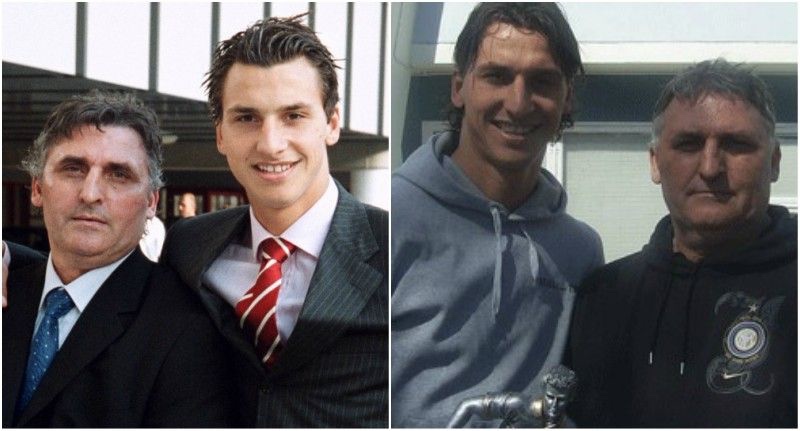
It took quite a while before Zlatan adapted to a single-parent family. Fully recovery occurred when he was allowed to re-establish contact with his father whom he loved more than his mum.
Early footballing career
After receiving a pair of football boots, Ibrahimovic began playing football at the age of six. He taught himself to play ball on an old gravel pitch outside his mother’s house. On a small,dusty pitch in the estate, Ibrahimovic and his friends tried outrageous tricks and flicks,spins and shots. The lack of space meant you had to be quick with your head and your feet.
When he was 15 years old , he preferred to work in the docks of Malmö instead of playing football. He was persuaded against the idea by his coach. Ibrahimovic also found doors closing as he tried to pursue a career as a professional footballer. Even when he joined the city’s professional club , Malmö FF at the age of 17, the parents of one of his teammates petitioned to have thrown him out of the club. This was because Zlatan head-butted his teammate who happens to be the parent only child.
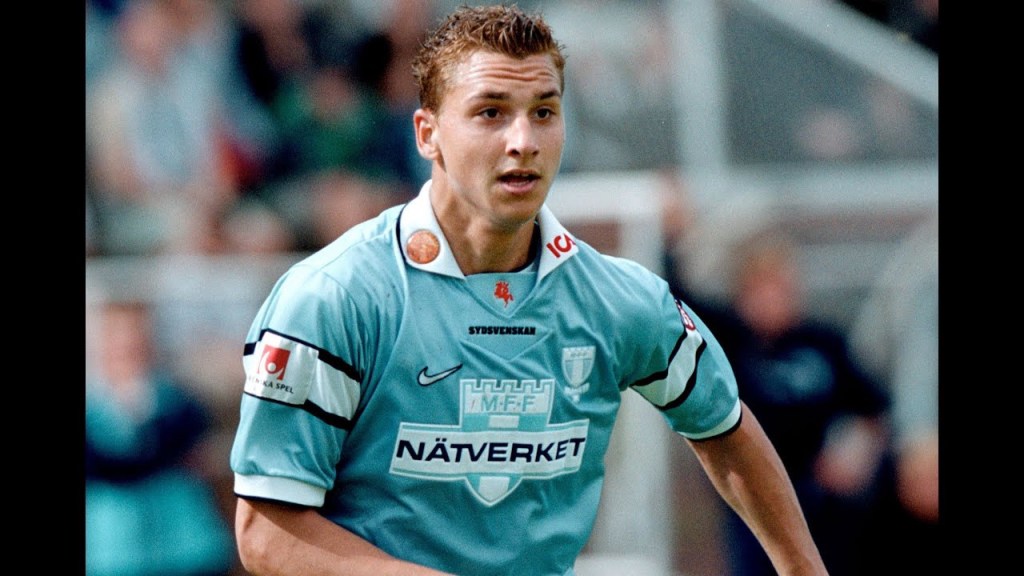
Ibrahimovic made his prof debut for Malmö FF in 1999, and helped the second division club make the leap to the first level. The 6’5 striker then signed with the prominent Dutch club AFC Ajax.
Respect for Brazilian legends
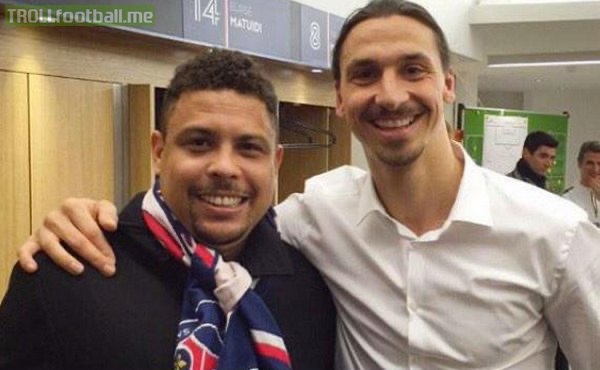
His heroes were not Swedes, even thou they finished third in the 1994 World Cup. He only had eyes for the brilliance of Brazil, studying the likes of Ronaldo de Lima and Ronaldinho. He watched severally and mastered video clips on how they performed their dribbles.
According to Zlatan “I don’t watch Sweden back then, I never did”, he says. “I loved Brazil because they were something different. They touched the ball differently, like field hockey where you drag the ball. That was magic and it felt totally different to anything I had seen before.”
The best players Zlatan played with
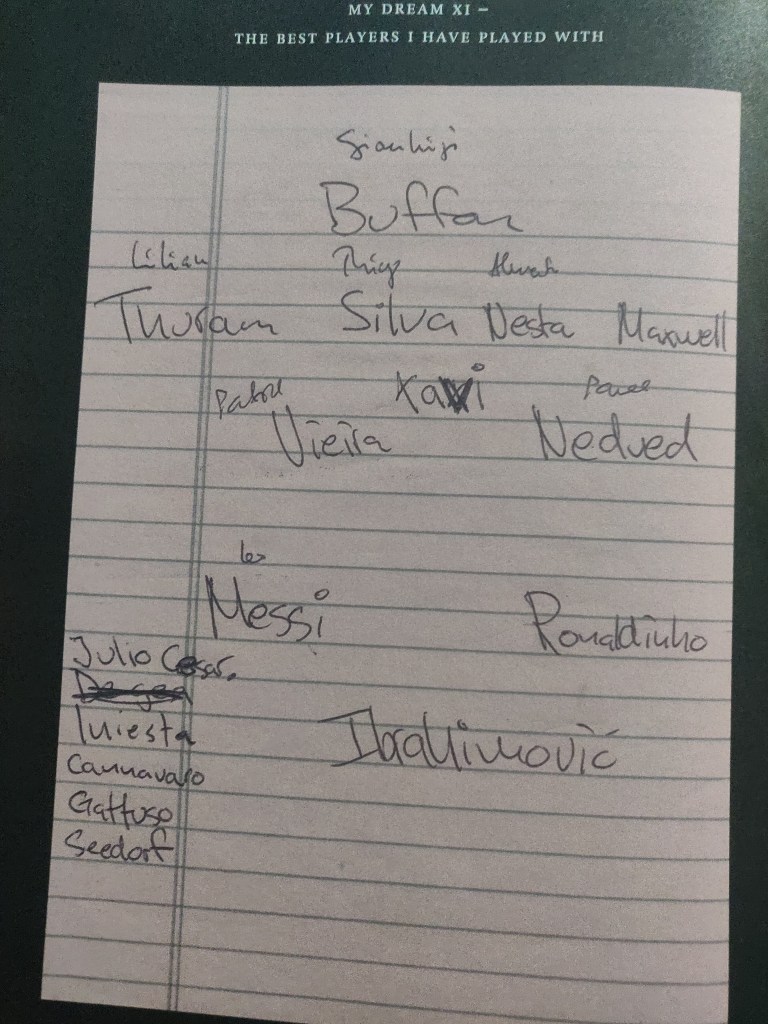
Sports teaches us important life lesson
Teamwork
Football requires a unique brand of teamwork. When you are a part of a football team, sometimes with up to 90 other players, understanding your role and that of your teammates is critical. Trusting teammates to do their job is also of utmost importance. All teammates count, including players on the second and third string. The emotional ups and downs that a team may experience help to build trust over time.
Discipline
Football requires discipline and a solid work ethic. Showing up for practice on time, following the team rules, and learning the plays are all keys to success on the football field. When the player’s football career is over, he can apply what he learned about discipline to his career and family life.
A successful adult shows up for meeting and appointments on time, takes the initiative to improve his skills, and understands and follows the rules of his company and, on a larger scale, the laws of his community.
Perseverance
Football provides a variety of challenges that test and help to build a player’s perseverance . Common pitfalls like losing a big game, not making first string, or missing a play that results in a score for the other team are much like life—roadblocks that are inevitable. Even physical challenges, such as not having enough strength or not being as fast or as good at catching a ball, may even tempt a person to quit.
Goal-Setting
Like so many sports, football is awash in statistics: points scored, rushing yardage, passing yardage, catches, tackles, sacks, and blocks, among others. With the help of his team and coaches, the young player learns to set goals and work toward achieving those goals. There are a number of team-oriented goals as well, which help a player be accountable for achieving his expectations as part of the team.
Goal-setting is crucial for success in the business world and in your personal life. For example, if your goal is to buy a house for your growing family, you need to make a plan to ensure you can afford the home of your dreams.
Success and Failure
Playing football teaches the young players how to handle both success and failure. Very few football teams remain undefeated, so at some point, they must learn to accept a loss but also learn from it to become stronger as individuals and as a team. They learn not to blame the loss on anyone but to focus on how they can improve.null
Just as important as learning how to handle failure is learning how to handle success. No one likes a poor winner. Acknowledging the hard work of the losing team by shaking hands at the end of the game teaches character. Someone who is gracious win or lose on the football field grows into a co-worker or supervisor who gains the
Social and emotional benefits
Leadership Skills Early on in Life
Every sports team has a leader, sometimes it is a coach, other times it is a veteran player. Either way, they are powerful guides able to motivate a group of people to perform beyond their current capabilities.
This happens in individual sports as well, often leaning on a coach or trainer to help guide and motivate towards success.
Even if you aren’t the current leader, being surrounded by these strong personalities able to change the feeling in a room has a positive effect on everyone, and can teach through action.
Bonds for Life
The great social benefit of playing sports are all the new friendships you’re going to make. Some could even last forever.
It’s highly likely that you’ll make many friends for one main reason: you share the same passion for the same sport. You’ll always have something to talk about and remember good old days in the dressing room or on the playing field.
The Shoes on the Other Feet
Another emotional benefit of playing sports is empathy. Empathy means that we care about each other. In sports, teammates work as one. They support each other, they motivate each other, and they care about each other.
A healthy and stable team has a higher chance of success. The more you care for your teammates, the more likely you are to care about, and attempt to understand, people in general. When you have empathy you are better able to translate the world through someone else’s viewpoint, not just your own. And with that ability comes great power to do good.
Methodological, Empirical and Conceptual Considerations
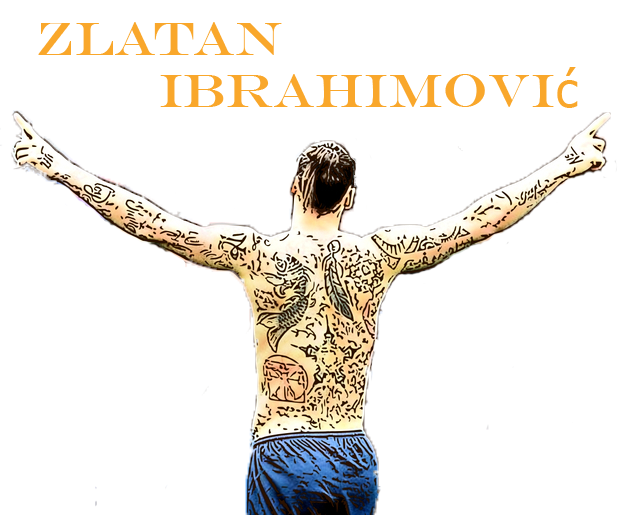
The mediatized buzz about the autobiography becomes part and parcel of the ongoing representation of the footballer. This is also due to the fact that the autobiography was released both as a book, an e-book, an audio book, an mp3 file, a biography application and as an easy-to-read version in Swedish, aimed at consumers who usually do not read books. In the biography application, the story from the book is transformed into an interactive storyline with added material such as videos, links, short narratives not presented in the book, memorabilia, tattoo stories, statistics and visualizations showing a number of Ibrahimović’s boots and his tattooed body. The life story told in the book is changed by narratives being added, which fragments the storyline and develops certain moments, e.g. his childhood experiences, through visualizations and timelines. In a trailer made by the Swedish publisher promoting the biography application, the footballer utters the following one-liner: ”Remember there is only one Zlatan, and this is Zlatan and this is my story”
Thus, it is not enough to rely on book reviews or to exclusively follow the book’s traces in publics to understand the construction of Zlatan. A global celebrity such as this must be viewed as cultural content in a mediatized network. The materiality of the book is no longer a necessary condition for literary content to be made public and known, as users and readers can easily pick and choose content to be commented upon as well as rewritten and interpreted in different media.
Abstract:
This paper makes an attempt to study and analysis the career of the famous Swedish footballer Zlatan Ibrahimovic. It has been observed that his career path is unique and this paper further attempts to analyse using his story and how sports teaches us real life lessons , social and emotional benefits.
Conclusion:
Furthermore this paper also attempts to study how learning a sport is not limited to athletic skills,coaching effectiveness and coach-athlete relationship,and how it is greatly influenced by the multidimensional aspects of an athlete’s individual and social biography.
For this purpose “I’m Football” the biography book of Zlatan Ibrahimović has been used as primary source.
Keyword:
Zlatan Ibrahimovic, I’M FOOTBALL, Biography, Struggle, Image.
Secondary sources:
Baxter,Kevin. ‘How A difficult childhood helped create Zlatan Ibrahimovicć the soccer god’. LOS ANGELS TIMES. Published on April 2018. https://www.latimes.com/sports/soccer/la-sp-galaxy-Ibrahimovic-20180407-story.html. Accessed on 3rd October 2020.
Smith,Ben. ‘Zlatan Ibrahimović :From teenage outcast to word great’. BBC SPORT. Published on 10th September,2013. http://www.bbc.com/sport/football/20435146. Accessed on 5th October,2020.
‘Zlatan Ibrahimović interesting stories and interviews’. WeWatchFootball. Published on 20th February,2020. http://youtu.be/vpDpfr1UXts. Accessed on 6th October,2020.
Bibliography:
Books,internet,YouTube,google.
Primary source:
Olsen,Mats. ‘I’m Football’. Published on 2018.
 ZLATAN IBRAHIMOVIC